

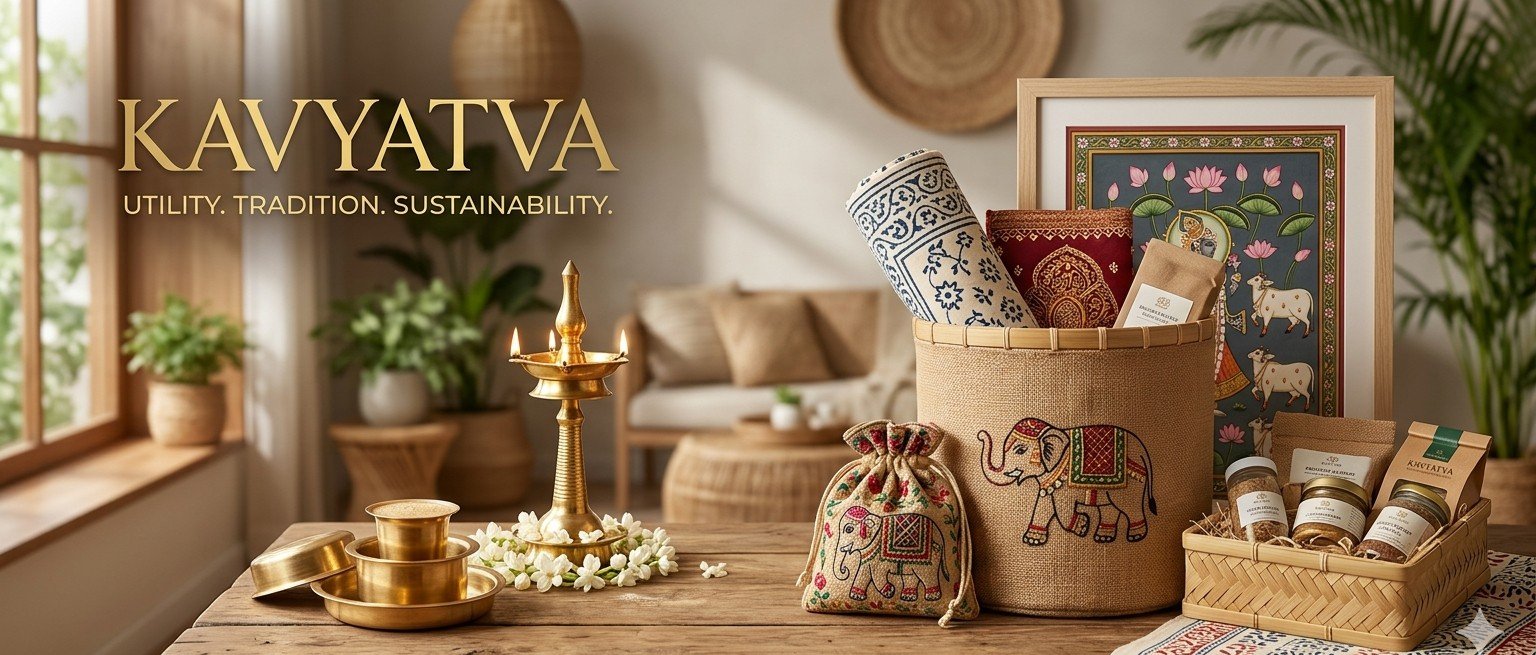

The most useful gifts tend to become the most memorable. For Kavyatva, conscious gifting is not about choosing a product simply because it looks “green”; it is about choosing something thoughtfully made, culturally relevant and useful long after the occasion.
Why Utility Is Changing the Way We Gift
Gifting habits are changing. People still want a gift to feel special, but there is less appeal in objects that exist only to look impressive for a few days. A basket that becomes home storage, a brass piece that stays in a prayer space or a Potli that is reused for small belongings has a life beyond the occasion.
That shift is especially relevant to handcrafted gifting. The value of a handmade product is not only in the material or the finish. It is also in the skill behind it, the character of the material and the possibility that the recipient will continue using it.
Kavyatva's own collections are built around this idea: traditional and natural materials such as brass, metal, jute, palm leaf, river grass, wood and textiles are adapted into gifts for weddings, celebrations, homes and corporate occasions.
Brass: A Gift That Can Stay in the Home
Brass has a natural place in Indian homes. Diyas, lamps, jars, bowls and traditional vessels can move easily between everyday use, festive rituals and home décor. That versatility makes brass particularly suited to gifting when the aim is to give something that does not become disposable after the celebration.
A brass diya can become part of a family's festival rituals. A traditional vessel can find a place in a pooja space or dining area. The material also develops its own character over time, which is part of the appeal of choosing a traditional metal object over a short-lived decorative item.
Kavyatva's brass collection includes diyas, vellakku, lamps, jars, Dabara sets and Haldi Kumkum pieces, giving the material several different roles in traditional and contemporary gifting.
Explore the brass Dabara collection · Explore brass lamps
Natural Fibres Bring a Different Kind of Warmth
Not every gift needs the visual weight of metal. Palm leaf, river grass and jute bring texture, softness and a more relaxed character to gifting. They work particularly well when the occasion calls for something light, practical and connected to traditional craft.
Light, woven and rooted in craft
Palm-leaf products can work beautifully for return gifts, festive presentation and small home-storage pieces. Their woven surface gives even a simple gift a handcrafted character.
Natural texture for everyday use
River-grass baskets, boxes and pouches offer a softer, more organic look and can suit both traditional celebrations and contemporary homes.
Practical for gifting at scale
Jute works well for bags, baskets and packaging where durability, natural texture and a relaxed visual style matter.
Softness, colour and personal detail
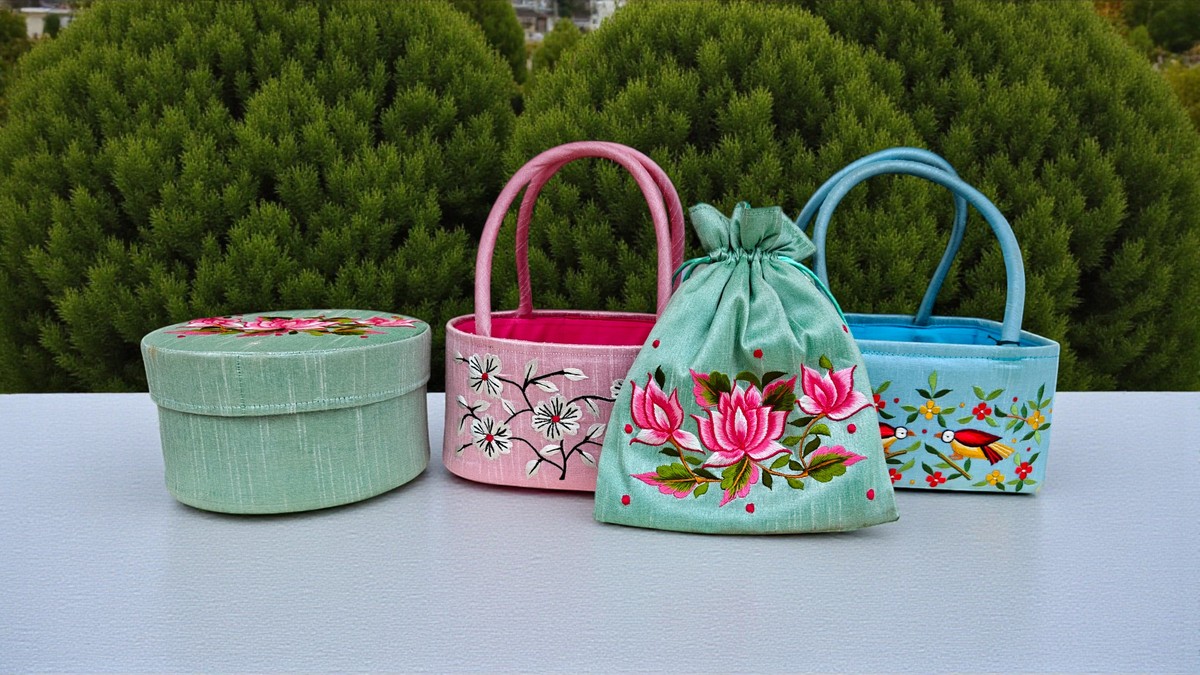
Embroidery, brocade, silk-look fabrics and printed textiles can make Potlis and pouches feel distinctly celebratory while remaining reusable.
These materials are also part of Kavyatva's current product and craft language, alongside metal, brass, wood, textiles and embroidery.
Why Pichwai and Traditional Art Work So Well in Gifting
A handcrafted gift does not have to be plain to be sustainable. Art gives utility a second layer of meaning. A box, Potli or tray becomes more personal when its surface carries a recognisable Indian visual language.
Kavyatva uses traditional-inspired artwork including Pichwai, Kalamkari and embroidered motifs across its gifting collections. The current Potli collection, for example, includes Pichwai, Kalamkari, Lakshmi and embroidered designs.
Personalisation Makes Sustainable Gifting More Meaningful
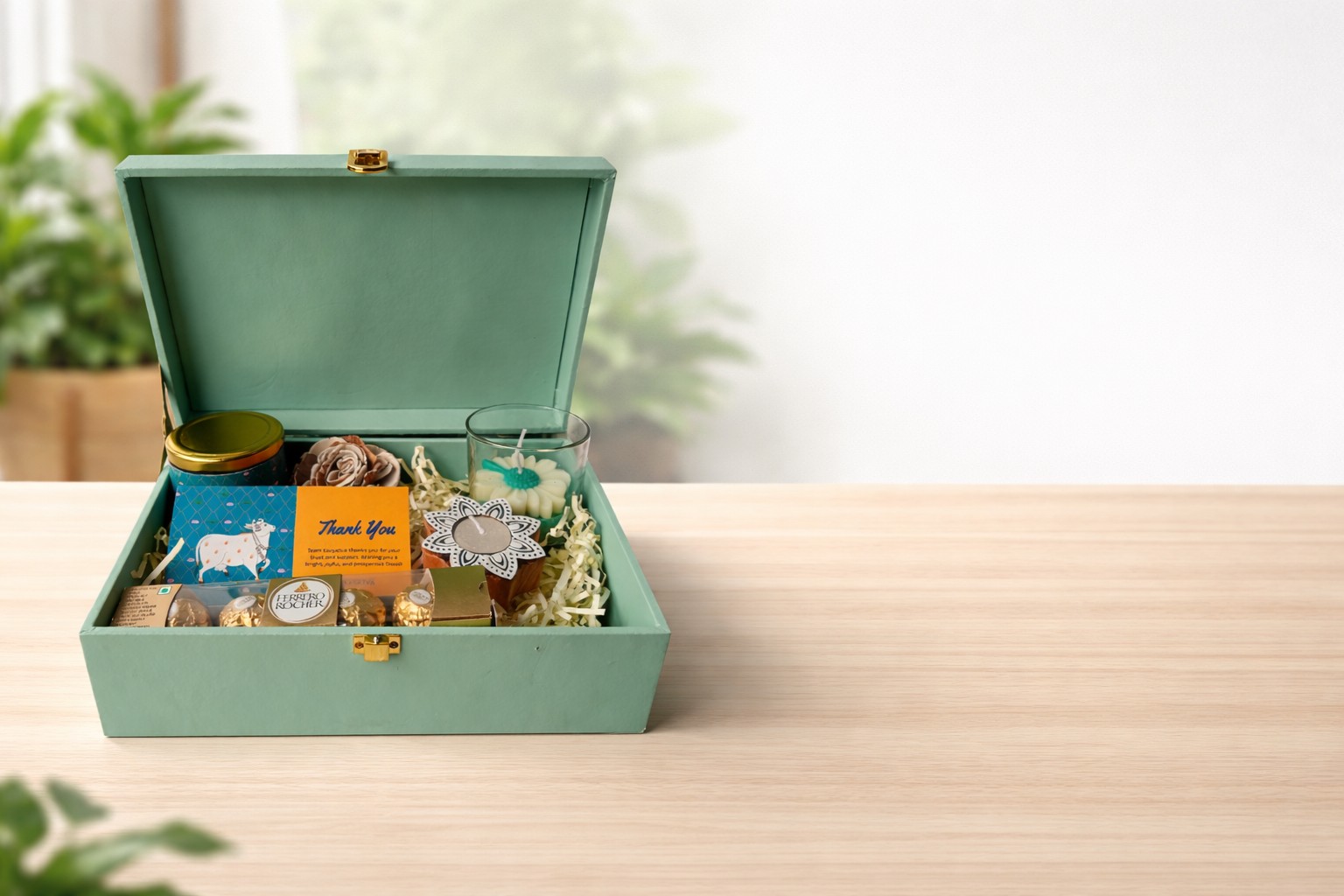
Personalisation is often treated as printing a name or logo. It can be much more subtle than that. The material, colour, artwork, packaging and message can all be chosen around the occasion and the person receiving the gift.
For a wedding, a Potli can be matched to the celebration's colours. For a corporate gift, a small brand tag or thoughtful card can identify the sender without covering the craft itself in a large logo.
Kavyatva offers customisation across products and can work with names, artwork, event details and corporate branding depending on the item.
Choosing the Right Gift by Occasion
| Occasion | Good Direction | Why It Works |
|---|---|---|
| Wedding & Return Gifts | Potlis, brass pieces, baskets, traditional keepsakes | Combines celebration, tradition and usefulness |
| Festivals | Diyas, lamps, brassware, curated hampers | Connects the gift with the season and its rituals |
| Corporate Gifting | Curated hampers, useful handcrafted pieces, personalised boxes | Feels thoughtful without becoming generic merchandise |
| Housewarming & Pooja | Brassware, lamps, traditional décor, auspicious gifts | Fits the meaning of a new beginning |
What Makes a Sustainable Gift Credible?
“Sustainable” is a useful word only when the product and its packaging support the claim. A practical way to assess a gift is to ask a few simple questions: What is it made from? How long is it likely to be used? Can the packaging itself be reused or avoided? And is the craft or production story clear enough to explain honestly?
- Material: prefer materials whose purpose and character can be explained clearly rather than relying only on a sustainability label.
- Longevity: a reusable object generally creates more value than a decorative item designed for one occasion.
- Packaging: avoid unnecessary layers and choose reusable or low-waste presentation where practical.
- Craft: explain what makes the item handcrafted instead of using “artisan” as a decorative marketing word.
- Personalisation: customise thoughtfully so the gift feels personal without making it harder to reuse.
This direction also reflects the wider 2026 gifting conversation: major Indian gifting publishers are increasingly discussing sustainability, personalised gifting, regional sourcing and gifts that have usefulness beyond a single occasion.
Sustainable materials, personalisation and useful gifts are becoming increasingly important in corporate gifting. Kavyatva's own collections already centre on natural materials, handcrafted products, customisation and traditional gifting, making these themes part of the brand's existing approach rather than a trend added only for SEO.
Frequently Asked Questions
What makes a gift sustainable?
Are handcrafted gifts suitable for corporate gifting?
Can Kavyatva personalise sustainable gifts?
Planning a thoughtful handcrafted gift, custom hamper or bulk order?


