

What Is Navratri?
Navratri means “nine nights” and is a Hindu festival dedicated to the worship of Shakti, the divine feminine power. Among the different Navratris observed during the Hindu calendar year, Sharad Navratri is one of the most widely celebrated.
During Navratri, devotees traditionally worship nine manifestations of Goddess Durga known as the Navadurga. Each form represents a different aspect of Shakti, from strength and courage to devotion, motherhood, transformation, purity and spiritual accomplishment.
Navratri is celebrated differently across India. Some communities observe fasting and daily puja, while others celebrate with Garba, Dandiya, Durga Puja, devotional music, temple visits and family gatherings.
Navratri at a Glance
- Duration: Nine nights and ten days
- Focus: Worship of Shakti
- Forms: Navadurga
- Major celebration: Sharad Navratri
- Final festival: Vijayadashami / Dussehra
Festival dates are determined by the Hindu lunar calendar and can vary by year and location.
Everything You Need to Know About Navratri
The 9 Forms of Maa Durga
The Navadurga are nine forms of Goddess Durga traditionally worshipped during Navratri. Each form has its own name, symbolism, traditional iconography and devotional significance.
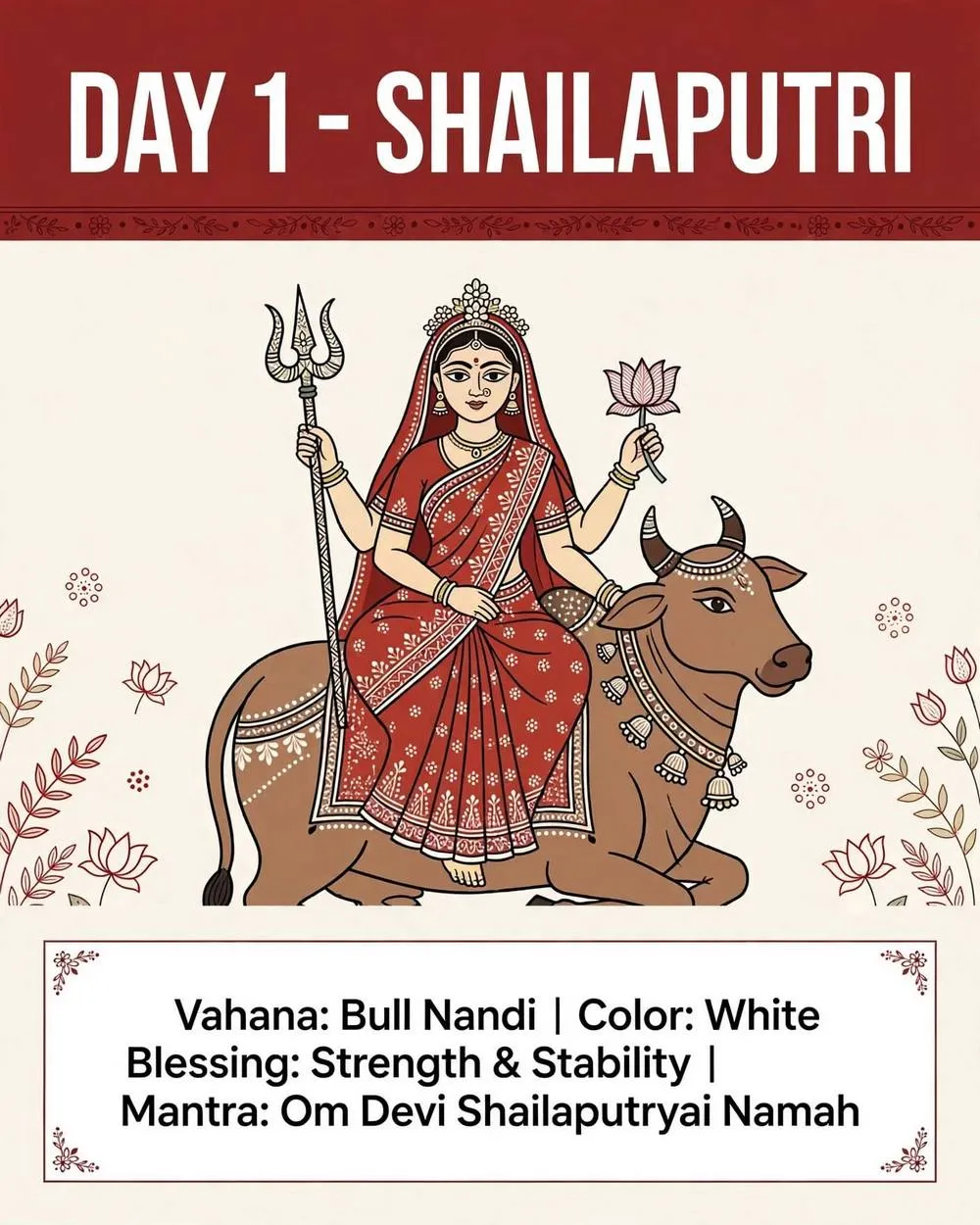
Maa Shailaputri
Meaning: Daughter of the Mountain
Shailaputri is the first form of Navadurga. Her name means “daughter of the mountain”. She is traditionally identified with Parvati in her form as the daughter of Himavan.
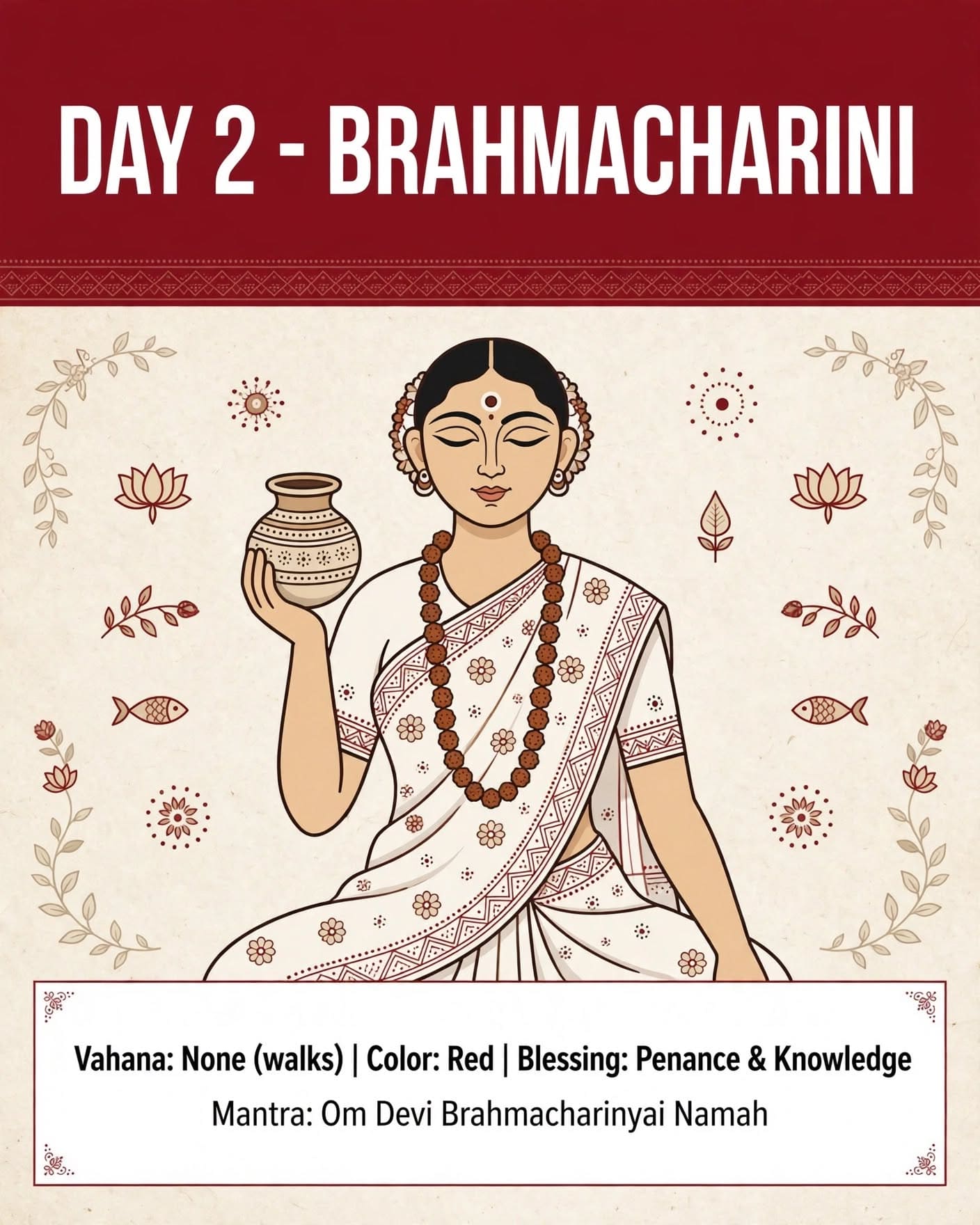
Maa Brahmacharini
Meaning: The Devoted Ascetic
Brahmacharini is the second form of Navadurga. She represents tapasya, devotion, discipline and perseverance. Traditional depictions show her carrying a rosary and kamandalu.
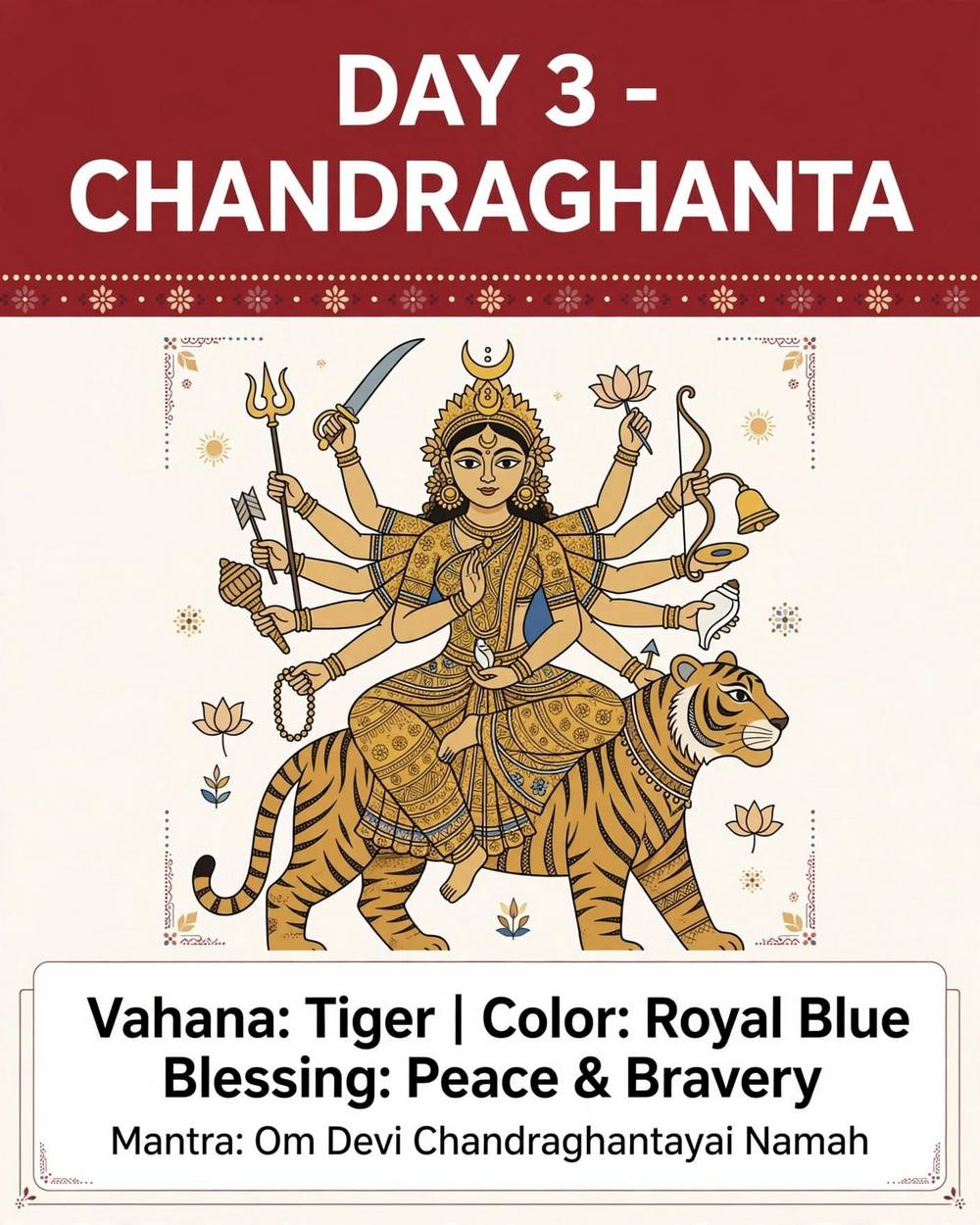
Maa Chandraghanta
Meaning: The Goddess with the Crescent Moon
Chandraghanta is the third form of Navadurga. Her name refers to the crescent moon shaped like a bell traditionally shown on her forehead. She is associated with courage and protection.
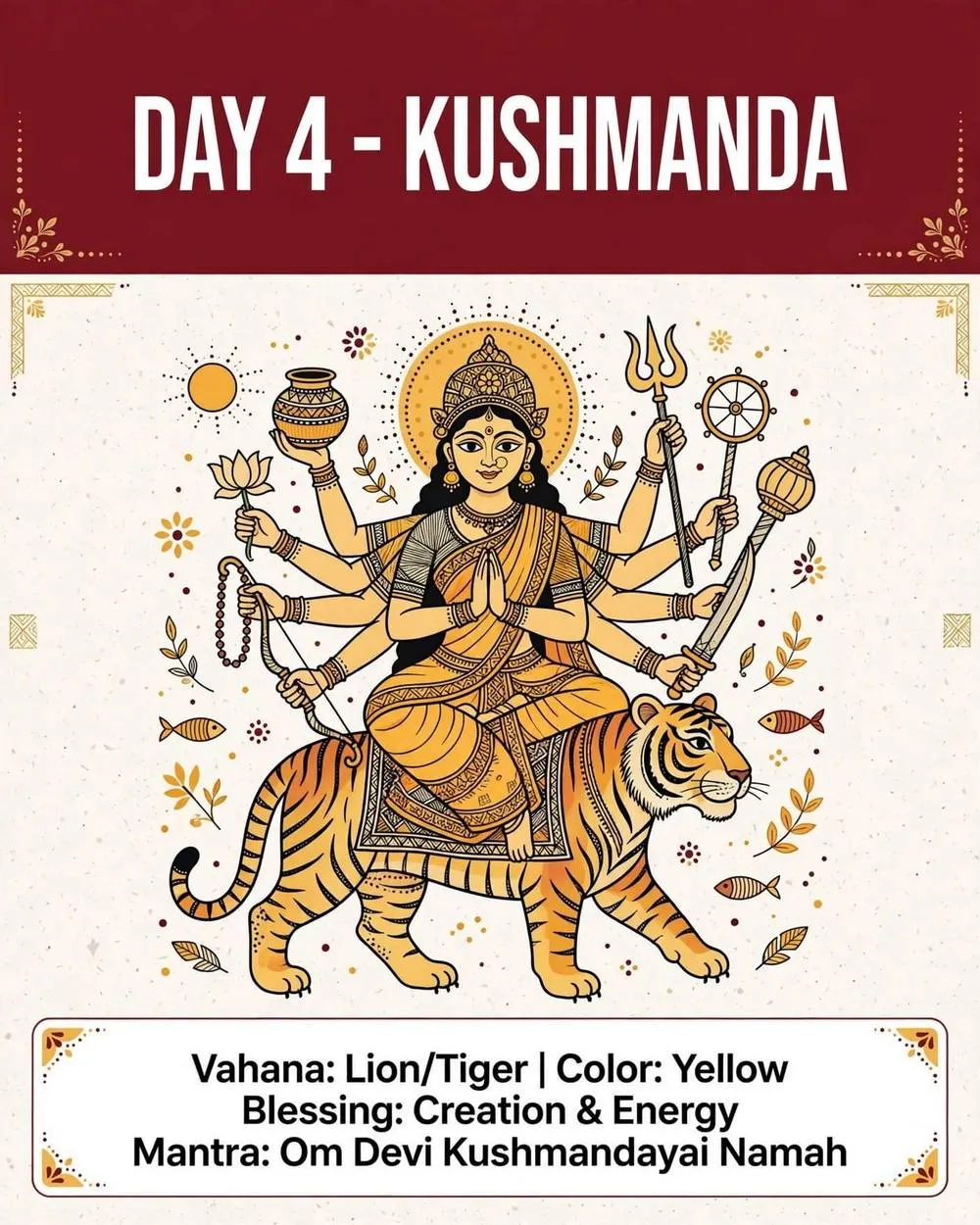
Maa Kushmanda
Meaning: The Cosmic Creative Energy
Kushmanda is the fourth form of Navadurga. Traditional accounts associate her with the creative and sustaining energy of the universe.
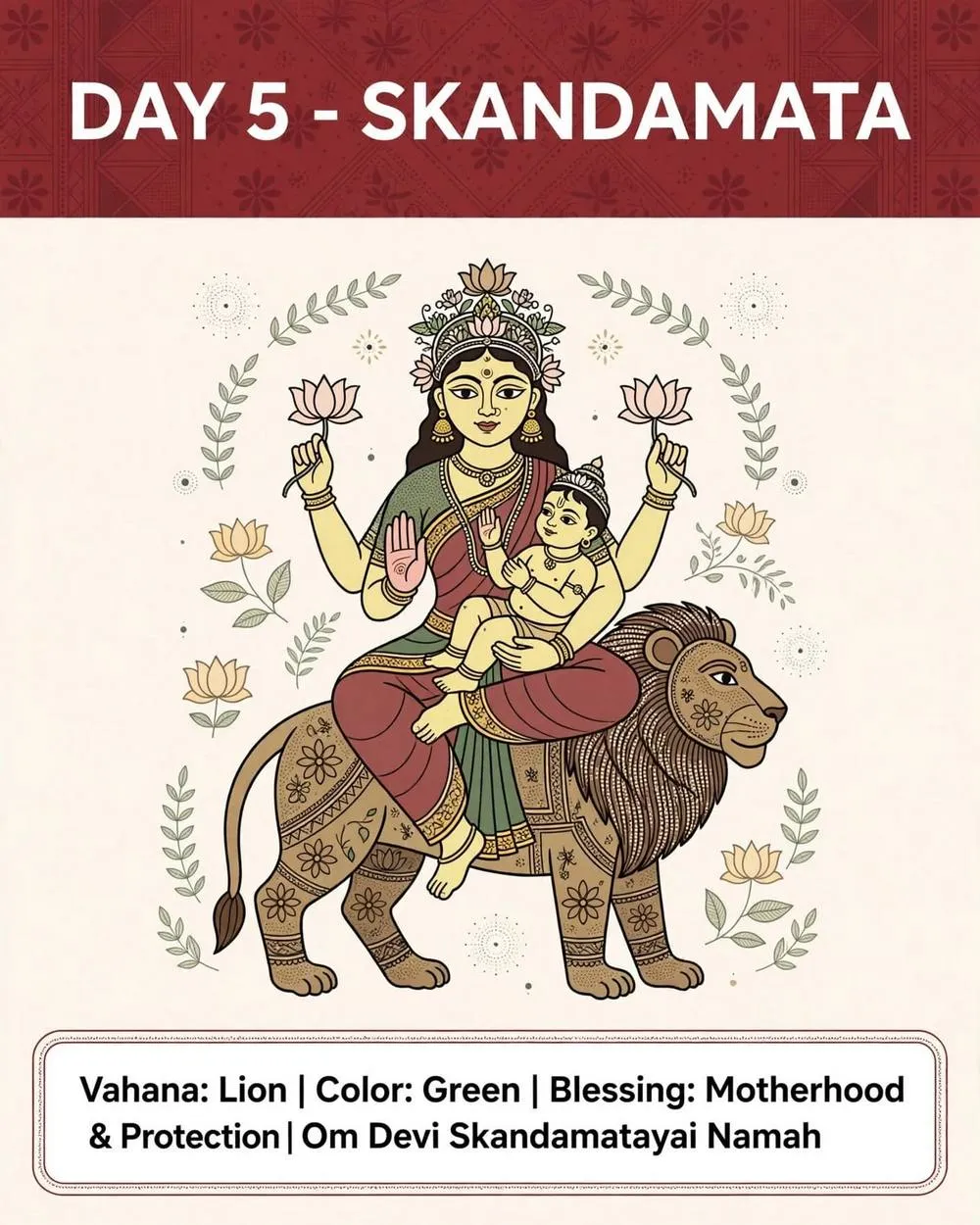
Maa Skandamata
Meaning: Mother of Skanda
Skandamata is the fifth form of Navadurga and represents the maternal aspect of Goddess Parvati. She is traditionally shown holding her son Skanda, also known as Kartikeya.
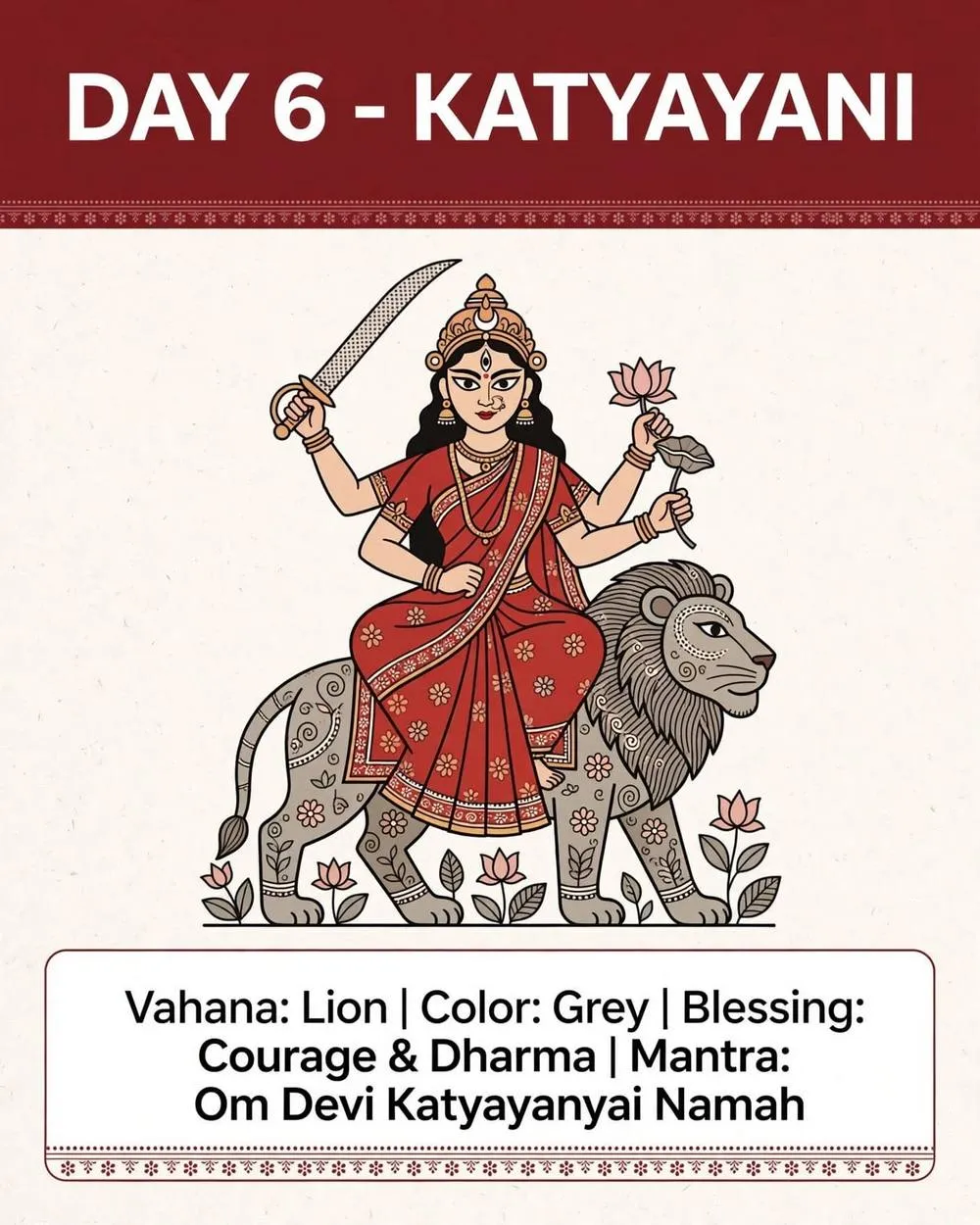
Maa Katyayani
Meaning: The Warrior Form of the Goddess
Katyayani is the sixth form of Navadurga. Traditional mythology connects her with the destruction of the demon Mahishasura. She represents the fierce and protective power of Shakti.
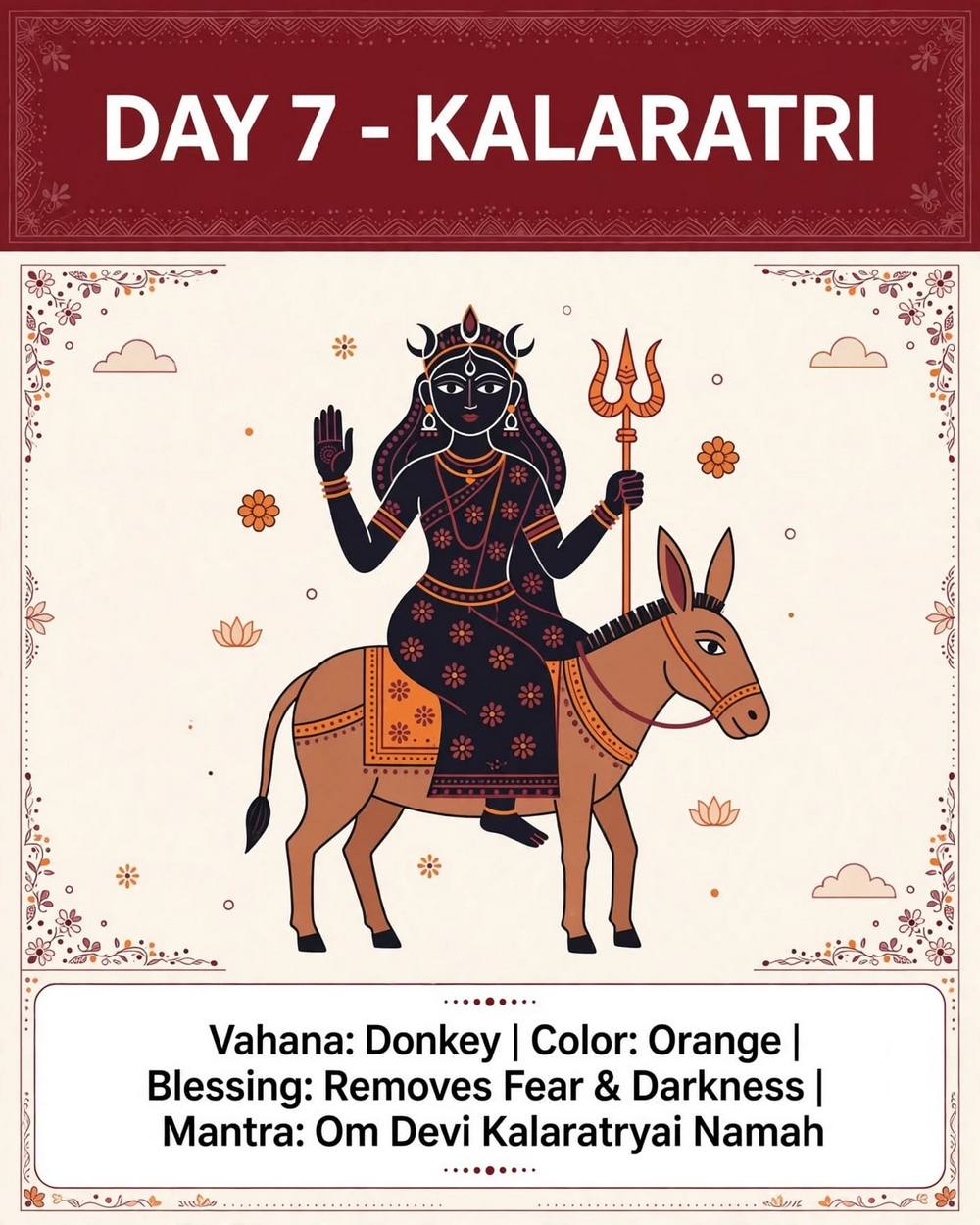
Maa Kalaratri
Meaning: The Fierce Form of the Goddess
Kalaratri is the seventh form of Navadurga and one of the most fierce manifestations of Shakti in traditional iconography. Her imagery represents the destruction of darkness and fear.
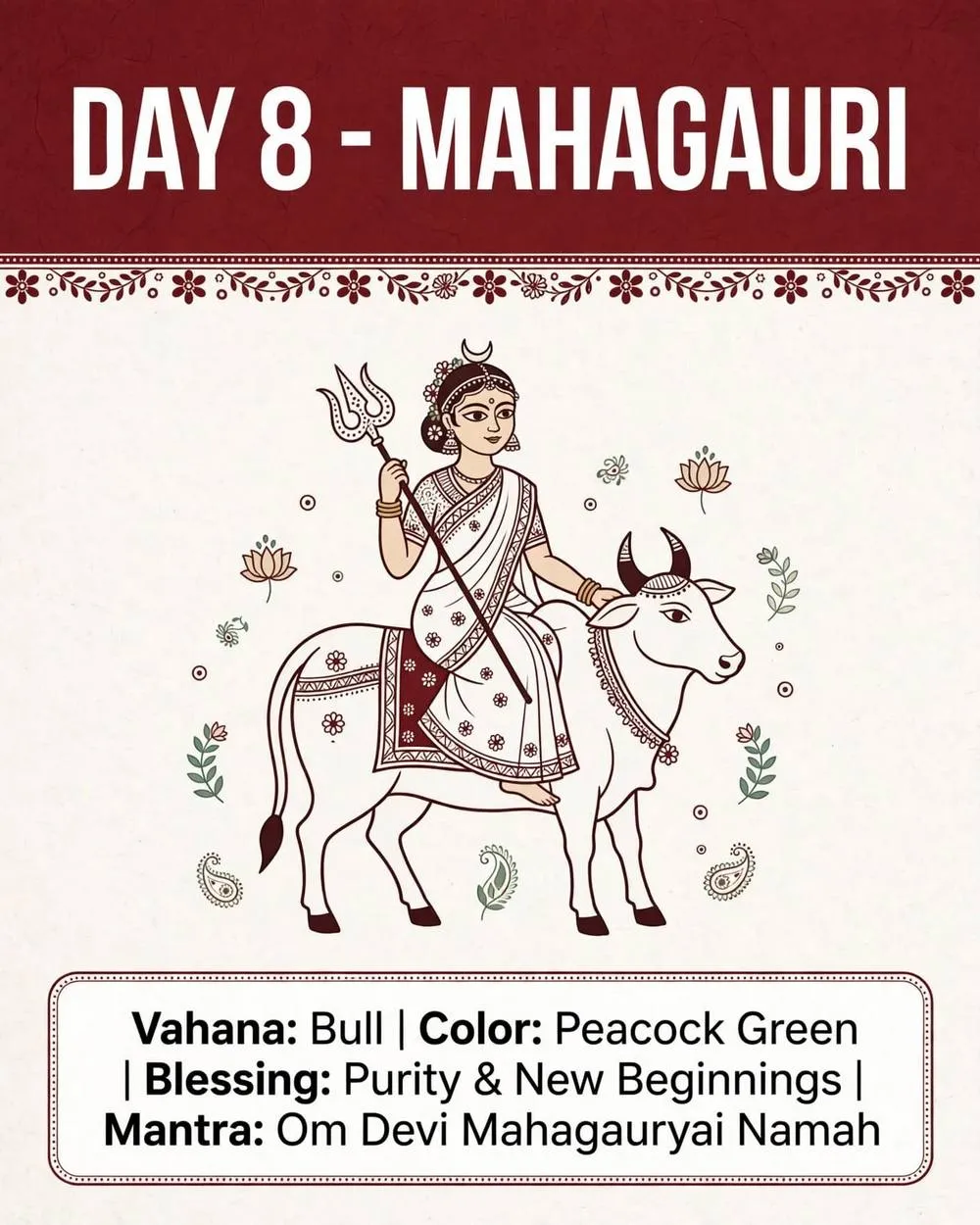
Maa Mahagauri
Meaning: The Great Radiant One
Mahagauri is the eighth form of Navadurga. She is traditionally associated with purity, peace, serenity and spiritual clarity.
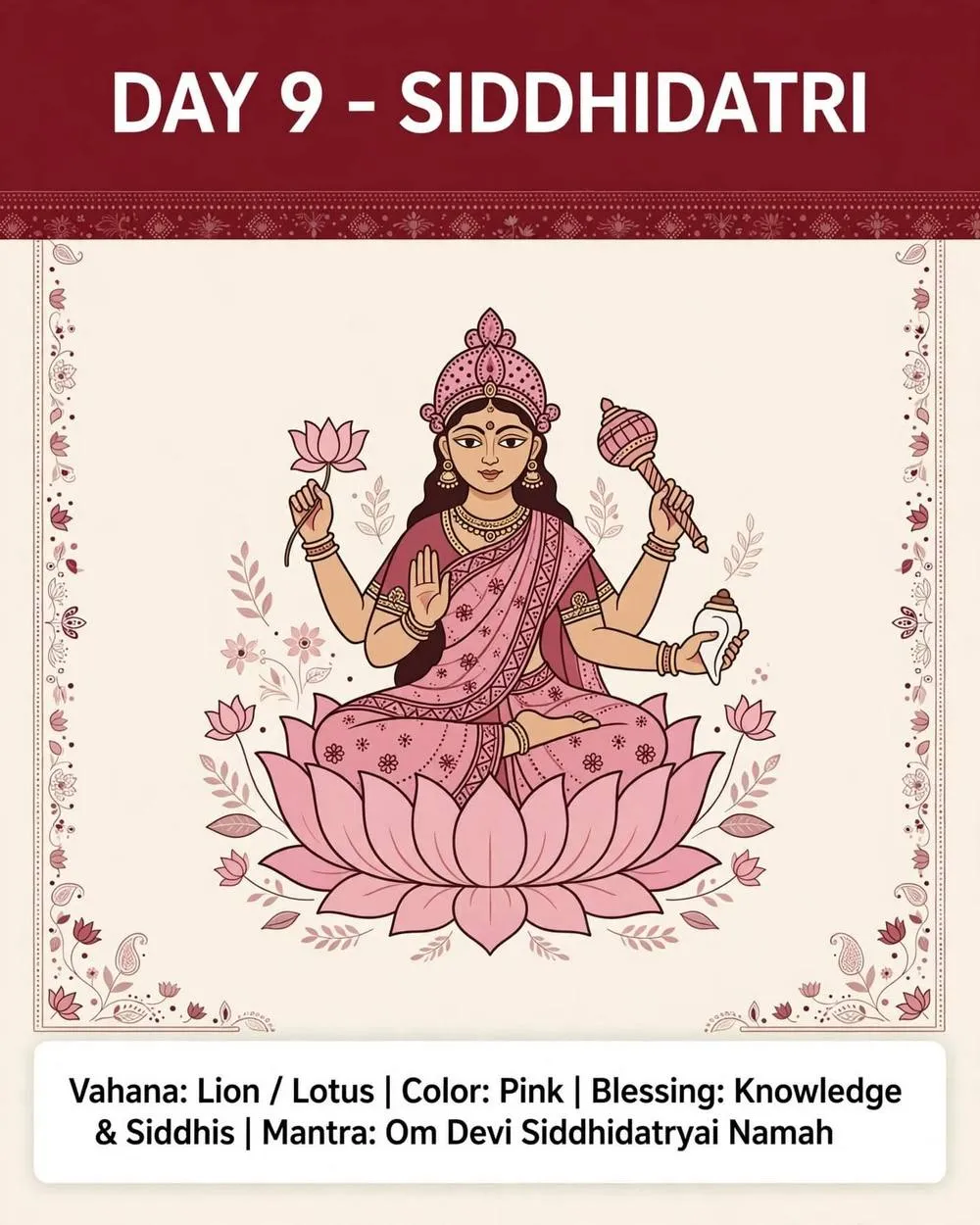
Maa Siddhidatri
Meaning: The Giver of Siddhis
Siddhidatri is the ninth and final form of Navadurga. Her name refers to siddhis, traditionally understood as spiritual accomplishments or attainments.
How to Perform Navratri Puja at Home
Navratri puja procedures vary between families and traditions. The following is a simple framework for understanding the basic steps commonly followed during home worship.
Clean the Puja Space
Clean the worship area and prepare yourself by bathing and wearing clean clothes.
Prepare the Altar
Place an image or murti of the Goddess on a clean altar. Many households also establish a kalash at the beginning.
Light a Diya
Light a diya and begin the worship with a calm and focused mind.
Offer Puja Items
Offer flowers, water, fruits, naivedya and other suitable items according to your tradition.
Chant and Pray
Recite the mantra associated with the day's form of Navadurga or prayers followed by your family.
Perform Aarti
Conclude the worship with aarti and prayer before receiving prasad.
Mantra for Each Form of Maa Durga
Important Facts About Navratri
Nine Nights
The word Navratri comes from Sanskrit words meaning “nine nights”.
Navadurga
The nine forms of Goddess Durga worshipped during Navratri are collectively called Navadurga.
Different Navratris
Several Navratris are observed during the Hindu lunar year, with Sharad Navratri being one of the most prominent.
Regional Celebrations
Navratri traditions include Garba, Dandiya, Durga Puja, temple worship and many regional customs.
Fasting Traditions Differ
What devotees eat during vrat can vary according to region, family tradition and individual religious practice.
Vijayadashami
Sharad Navratri culminates in Vijayadashami, commonly known as Dussehra, in the traditional festival cycle.
Celebrate Navratri with Thoughtful Gifting
Planning a Navratri gathering, pooja, community celebration or festive event? Explore Kavyatva's handcrafted gifting collections and customized hampers inspired by Indian craftsmanship.
Frequently Asked Questions About Navratri
What is Navratri?
Navratri is a Hindu festival dedicated to the worship of Shakti, the divine feminine power. Sharad Navratri is traditionally celebrated over nine nights and focuses on the worship of nine forms of Goddess Durga.
What are the 9 forms of Maa Durga?
The nine forms are Shailaputri, Brahmacharini, Chandraghanta, Kushmanda, Skandamata, Katyayani, Kalaratri, Mahagauri and Siddhidatri.
What can I eat during Navratri fasting?
Depending on tradition, devotees may eat fruits, milk, curd, paneer, makhana, sabudana, samak rice, kuttu, rajgira, singhara flour, potatoes, sweet potatoes and other permitted vrat foods.
Can I drink milk during Navratri vrat?
Milk and dairy products are permitted in many Navratri fasting traditions, although individual family and regional rules differ.
Can I eat rice during Navratri?
Regular rice is avoided in many vrat traditions. Samak rice, also called barnyard millet or vrat rice, is commonly used as an alternative where permitted.
Which Devi is worshipped on each day of Navratri?
The traditional sequence is Shailaputri, Brahmacharini, Chandraghanta, Kushmanda, Skandamata, Katyayani, Kalaratri, Mahagauri and Siddhidatri.
How do I perform Navratri puja at home?
A simple home puja can include cleaning the worship area, preparing an altar, lighting a diya, offering flowers and naivedya, chanting prayers and performing aarti. Families may follow additional rituals according to their tradition.
What is Kanya Puja?
Kanya Puja is a tradition observed by many families during Ashtami or Navami. Young girls are respectfully worshipped as manifestations of the Goddess and offered food or gifts.
Why is Navratri celebrated for nine nights?
Navratri traditionally spans nine nights dedicated to the worship of the Goddess. The nine-night structure is associated with the nine forms of Navadurga in the Sharad Navratri tradition.
Can everyone observe a Navratri fast?
Fasting is a religious practice and should be adapted when necessary for health. People with medical conditions, pregnancy, nutritional requirements or medicines that require food should seek appropriate medical guidance before undertaking restrictive or prolonged fasting.
Explore More About Navratri
Planning Navratri Gifts or Return Gifts?
Tell us your occasion, quantity, budget and preferred style. We'll help you find a thoughtful handcrafted gifting option.
About This Navratri Guide
Navratri rituals, fasting practices, offerings and customs can vary according to region, sampradaya and family tradition. This guide presents commonly followed traditions and is intended for general cultural and religious information.
