

A Festival of Siblinghood · Tradition · Affection
Raksha Bandhan
More than a thread around the wrist, Raksha Bandhan is a celebration of affection, memory, family and the promises siblings carry through changing times.
- History & Legends
- Rituals & Traditions
- Modern Rakhi Celebrations
- Quotes & Messages
One Thread.
A Lifetime of Memories.
Raksha Bandhan is a festival that celebrates the bond between siblings — a bond built long before the rakhi is tied and carried long after the sweets are finished. At its heart is a simple gesture: a thread tied around the wrist, carrying affection, blessings and a promise of care.
that remembers.
Childhood changes quickly. The room you once shared becomes different homes, different cities and sometimes different countries. Yet Raksha Bandhan has a way of bringing the relationship back to something beautifully simple.
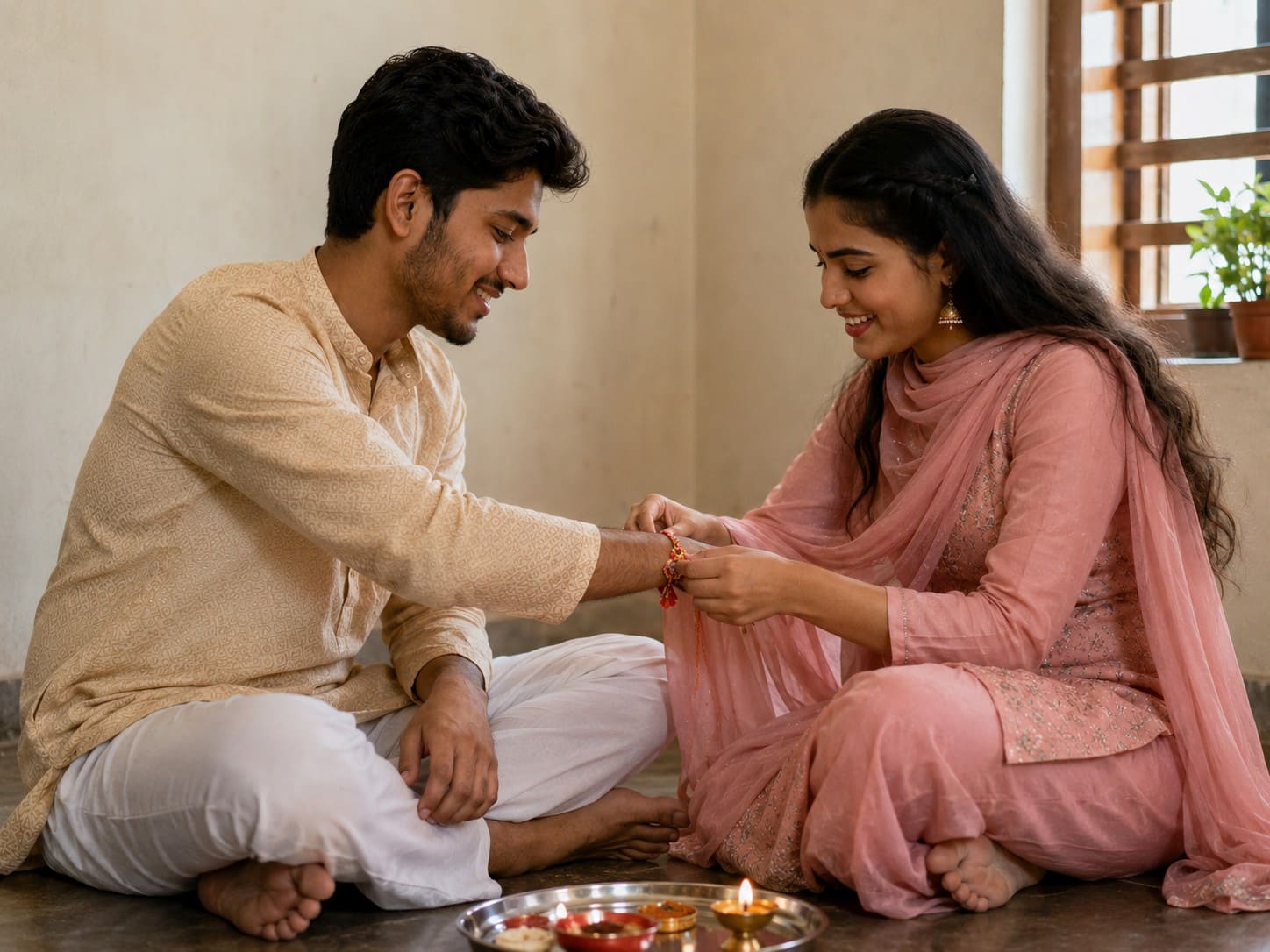
A sister ties the rakhi. A brother receives it. There are sweets, laughter, teasing, blessings and usually a gift. Beneath all of that is something older: the recognition that family remains important even when life moves everyone in different directions.
This is why Raksha Bandhan is celebrated. The festival gives siblings a moment to acknowledge their bond, express affection and renew the feeling of being there for one another.
Some bonds need no explanation. Raksha Bandhan simply gives them a day, a thread and a little more time together.
A rakhi is small enough to fit around a wrist, yet large enough to carry years of memories.
Growing up may change the distance between siblings, but it does not have to change the place they hold for each other.
Protection Is Only Part of the Meaning
The name Raksha Bandhan is commonly understood through the ideas of protection and a bond. Traditionally, the rakhi symbolises a sister's affection and prayers for her brother's wellbeing, while the brother's response represents care and responsibility.
But the modern meaning is broader. The festival is increasingly understood as a celebration of mutual affection rather than a one-way promise of protection. Sisters and brothers may both exchange gifts, write messages and make promises to support each other through life.
The History of Raksha Bandhan Is a Collection of Stories
Raksha Bandhan has been connected with several traditional stories and legends. These accounts are part of the cultural memory surrounding the festival rather than a single verified historical origin.
A Sacred Thread Before Battle
One traditional account tells of Indrani, the wife of Indra, tying a protective thread before Indra went into battle. The story connects the sacred thread with protection, prayer and courage.
A Bond Beyond Formality
Another beloved tradition tells of Draupadi tending to Krishna's injured hand. In popular retellings, Krishna's affection and promise of protection become part of the symbolic meaning associated with Raksha Bandhan.
A Symbol Older Than the Modern Gift
Across Indian traditions, sacred threads and protective amulets have long carried religious and cultural meanings. Raksha Bandhan grew into the sibling-centred celebration widely recognised today.
The Ceremony Is Simple.
The Feeling Is Not.
Traditionally, the rakhi ceremony may begin with a small puja thali containing items such as roli or kumkum, rice, sweets, diya and the rakhi itself. The sister applies a tilak, ties the rakhi and offers sweets, while blessings and gifts complete the celebration.
Families adapt the ritual in their own ways. Some keep it elaborate, while others make it intimate — sometimes simply tying the rakhi, sharing a meal and talking for a while.
The Tradition Changed.
The Feeling Didn't.
Raksha Bandhan has adapted naturally to modern family life. Brothers and sisters may live hundreds or thousands of kilometres apart, yet the festival continues through couriered rakhis, video calls, online gifts, digital greetings and family gatherings planned around travel.
The idea of protection has also become more mutual. A sister may support her brother through a difficult year; a brother may be the person she calls when life gets complicated. The rakhi can represent that wider promise of standing beside each other.
From One-Way to Mutual
The old language of a brother protecting his sister is often expressed today as mutual support, respect and emotional responsibility.
From Local to Long-Distance
A sibling no longer needs to be in the same home. Rakhis, gifts, calls and messages can cross cities, countries and time zones.
From Ritual to Memory
Many families now focus less on performing every formal step and more on creating one meaningful moment together.
Six Messages You Can Send as They Are
Short, personal Raksha Bandhan wishes for WhatsApp, Instagram, cards or a simple message to your sibling.
Happy Raksha Bandhan! No matter how much life changes, I will always be grateful to have you as my sibling.
We may argue, tease each other and go our separate ways, but some bonds never really change. Happy Rakhi!
Distance can keep us apart for a while, but it can never make you any less important to me. Wishing you a very Happy Raksha Bandhan.
To the sibling who has shared my childhood, my secrets, my fights and countless memories — Happy Raksha Bandhan.
A rakhi is only a thread, but the memories behind it are priceless. Wishing you happiness, success and everything good in life. Happy Rakhi!
Wherever life takes us, I hope we always find our way back to the laughter, comfort and love we have shared since childhood. Happy Raksha Bandhan.
Raksha Bandhan Questions, Answered
Why is Raksha Bandhan celebrated?
Raksha Bandhan is celebrated to honour the bond between siblings. The rakhi symbolises affection, blessings and a promise of care, while the celebration gives brothers and sisters an opportunity to express their relationship and spend meaningful time together.
What does Raksha Bandhan mean?
Raksha Bandhan is commonly associated with the ideas of protection and bonding. In modern celebrations, its meaning has expanded to include mutual support, affection, gratitude and the enduring connection between siblings.
Why is a rakhi tied on the wrist?
The rakhi is a symbolic thread. Tying it around the wrist turns the abstract idea of a blessing, bond or promise into a visible reminder that can be carried throughout the year.
What are the traditional Raksha Bandhan rituals?
A traditional Raksha Bandhan ceremony may include a tilak, rakhi, prayers or blessings, sweets and gifts. Families vary considerably in how formally they perform these rituals.
Is Raksha Bandhan only for brothers and sisters?
The festival is strongly associated with siblings, but Raksha Bandhan traditions have also been used to express bonds of affection, respect and protection beyond biological brothers and sisters. The exact practice varies by family and community.
When is Raksha Bandhan in 2026?
Raksha Bandhan falls on Friday, 28 August 2026. It is observed on the full moon day, or Purnima, of the Shravana month. The exact auspicious ceremony time can vary by location.
Some Traditions Survive Because They Still Mean Something
Raksha Bandhan has changed with the way families live, travel, communicate and celebrate. Yet the heart of the festival remains remarkably simple: remembering someone, wishing them well and reminding them that they matter.
